|

|

|

|

|

|
|
|
||||||
|
|
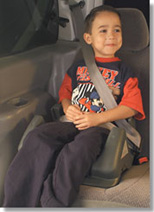
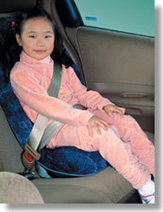
In Spanish In Hmong In Somali Installation Checklist 5: Belt-Positioning Booster Seat Important: This is a general checklist designed to be used in combination with your vehicle owner’s manual and your booster seat instruction manual. To get the most out of this checklist, have those manuals handy for quick reference. Minnesota's child passenger safety law requires a child who is both under age 8 and shorter than 4 feet 9 inches to be fastened in a child safety seat or booster. Under this law, a child cannot use a seat belt alone until they are age 8 or 4 feet 9 inches tall — whichever comes first. It is recommended to keep a child in a booster based on their height, rather than their age. (Check the instruction book or label of the child safety seat to be sure it is the right seat for your child’s weight and height.) Booster seats are used by children who have outgrown a car seat with a harness. Most children under the age of eight are not big enough to fit the vehicle seat belt properly. In fact, they can be injured by the belt in a crash. A booster seat makes a safety belt fit correctly on a child’s body. The booster seat’s design helps keep the lap belt low on the hips and the shoulder belt across the chest (rather than across the neck). It also makes children more comfortable: the raised base gives them a better view and allows their legs to bend normally. There are two types of boosters: high-back and no-back.
___ 1) Check that the seat is correct for child’s weight and height. High-back and no-back booster seats are for children who have outgrown harnessed car seats but are not large enough for the vehicle's lap and shoulder belt system. (Height and weight limits vary by manufacturer; check labels on the booster seat for specific limits.) Use a booster seat until the child reaches the upper weight limit or can pass the seat belt fit test. The lap belt should stay low on the hips and the shoulder belt should cross the chest and shoulder comfortably. Most children do not fit the vehicle seat belt until ages eight to ten, with a minimum height of four feet nine inches. ___ 2) Place the booster seat in the back seat of the vehicle.
Source: National Highway Traffic Safety Administration, U.S. Department of Transportation See how to do it on video: "Booster Seats for Your 4- to 8-year-old Child" linked from http://www.chop.edu/carseat |
|
|
|
|
|
|